
When you start planning a warehouse, you often build your ideas around pallet racks. But the real job is choosing the right frame for your space. The type of rack you pick must match exactly how your goods move and how fast you need them. They reflect how your warehouse works, grows, and stays efficient.
What Are Warehouse Racks
The true value of warehouse racks isn’t in the metal. It’s in the space, time, and speed they create.
Their design determines the entire logic of storage—how items are placed, located, and dispatched.
When you choose warehouse racks, you decide:
– How goods are organized
– How people or machines access them
– How space is used today
– How your warehouse can change in the future
Whether for pallets or pipes, racks define the storage. In truth, they are the master plan for your space, not a simple product.
Warehouse Racks Based on Stored Item Characteristics
Racks for Unitized Goods
When you store palletized or boxed goods, stability matters most.
These warehouse racks focus on load capacity and safety.
They are common in manufacturing plants and logistics centers.
Racks for Loose, Small, or Non-Unitized Items
When managing numerous SKUs with manual picking, your true center changes.
Visib ility and access speed become key.
Clear labeling and proper shelf height matter more than load depth.
In Manchester, the UK, an electronics spare parts warehouse replaced high pallet racks with manual-access warehouse racks. Picking errors dropped by 35% within one year.
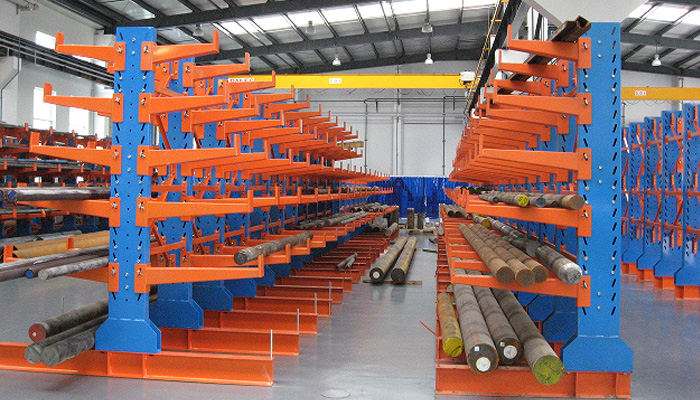
Racks for Long, Bulky, or Irregular Materials
Long or irregular goods cannot be palletized.
These warehouse racks need strong arms and wide spans.
Businesses dealing with steel, wood, and building supplies make frequent use of these racks.
Here, structure is more important than density.
Warehouse Racks Based on Storage Density Strategy
Low-Density, High-Accessibility Racks

If speed is your goal, you accept lower density.
Designed for efficient work, they feature open aisles and direct access to items.
Their advantage shows most in settings with fast-flowing stock.
High-Density Storage Racks

Limited space makes maximizing capacity the core logic of storage.
High-density warehouse racks use fewer aisles to make more space for stock.
You trade access speed for capacity.
Vertical Storage Racks

If land cost is high, height becomes your advantage.
These warehouse racks use vertical space.
They require strict safety design and sufficient clear height.
They are common in urban warehouses.
Warehouse Racks Based on Handling Method
Manual-Access Warehouse Racks
When workers pick goods by hand, ergonomics matter.
Shelf height and walking distance affect fatigue and accuracy.
They are a common choice for small to medium storage spaces.
Mechanical-Handling Warehouse Racks
If forklifts or lifts are involved, structure is critical.
Impact protection and long-term strength are key.
This is the most common form of warehouse racks in industrial storage.
Automation-Compatible Racks

If you plan automation, precision matters.
They need to interface correctly with conveyors and shuttle vehicles.
Pay a higher price initially, gain greater durability in return.
Automation-ready warehouse racks are a growing trend.
Warehouse Racks Based on Structural Configuration
Freestanding Racking Systems
These are the most common warehouse racks.
They stand independently and allow flexible layouts.
You can expand step by step.
Rack-Supported Structures
In exceptionally tall warehouses, the racking system is a key support structure.
They need a well-thought-out design.
They suit fully planned, large-scale projects.
Mobile & Dynamic Racking Systems
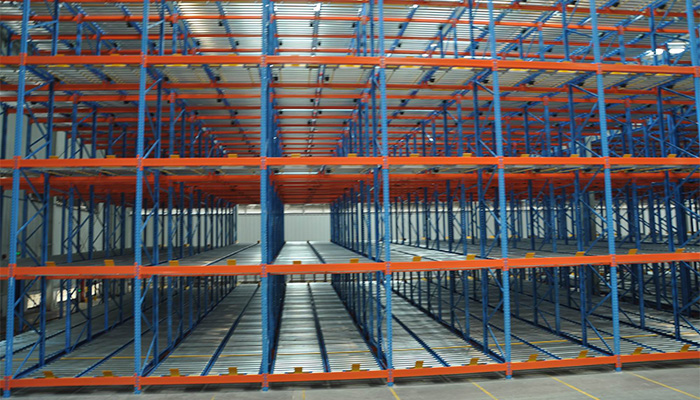
When space is extremely limited, movement helps.
Mobile warehouse racks reduce fixed aisles.
They are often used for high-value goods or restricted spaces.
Warehouse Racks Based on Warehouse Environment
Racks for Cold & Freezer Warehouses
Low temperatures affect steel behavior.
These warehouse racks require cold-resistant materials and stable connections.
They are essential in cold chain storage.
Racks for Hazardous or Regulated Goods
When storing chemicals or controlled goods, safety is the absolute priority.
These warehouse racks focus on separation and compliance.
They follow different rules from standard industrial racks.
Racks for Clean, Hygienic, or Controlled Environments
Food and medicine must be kept in clean conditions in the warehouse.
For these racks, two key needs are simple cleaning and dust resistance.
Surface treatment standards are higher.
Warehouse Racks Based on Business Model
Manufacturing Warehouse Racks
A factory warehouse often stores both raw materials and ready products.
Durability and stability matter most.
These warehouse racks focus on long service life.
Distribution & logistics Warehouse Racks
In logistics centers, speed determines cost.
Warehouse racks shape picking paths and flow.
Good layout reduces unnecessary movement.
Spare Parts & MRO Warehouse Racks
When SKU count is high, clarity is key.
These warehouse racks focus on classification and fast location.
They help reduce downtime.
Choosing the Right Warehouse Rack Type
Core Decision Factors
When you choose warehouse racks, start with simple questions:
– What is the shape of your goods?
– How fast do they move?
– How high and large is your warehouse?
– Do you need future expansion?
These factors matter more than rack names.
Why Warehouse Rack Selection Is a System-Level Decision
Warehouse racks affect safety, efficiency, and labor cost.
A wrong choice may not fail fast.
But over time, hidden costs grow.
Conclusion
Each rack type is a different storage system, not just a variation. Understanding this from an operational level is key to making decisions that last.
FAQ
1.How do you find the storage solution that truly matches your warehouse?
You begin with four key points: your cargo, your crew’s method, your space constraints, and your coming needs.
2.What makes warehouse racks a bigger idea than just pallet racks?
Because they define the entire system’s efficiency and layout, not only where pallets sit.
3.Where in industry do you most often find these different rack types?
Factories, distribution centers, online stores, cold rooms, and drug storage all rely on them.
 EN
 PT
 ES
 AR
 RU
 FR
