
Many people search for a standard warehouse rack height because they want a clear number. In real warehouses, there is no single height that fits every case. What is called “standard” is only a group of height ranges that are often used because they work well in daily storage operations.
Rack height is not just a design detail. It affects how much space you can use, how people work, and how safe the warehouse is over time.
What “Standard” Means in Warehouse Rack Height

Standard warehouse rack height does not mean a fixed rule. It means heights that are commonly seen in warehouses with normal buildings, normal goods, and normal working methods.
These heights are used again and again because they are practical. They help avoid wasted space, unsafe access, and difficult daily work.
Why Rack Height Is Important

A warehouse is not only about floor space. Vertical space matters just as much. Rack height decides how much of that space becomes real storage.
If racks are placed too low, a lot of the space above them goes unused.
If racks are too high, daily work can become slow or unsafe.
The right height sits between these two problems.
Common Warehouse Rack Height Ranges
In most warehouses, rack height falls into a few simple ranges:
– Around 2 to 3 meters
Often used where workers pick goods by hand and need easy access.
– Around 4 to 6 meters
Very common in general storage areas. This range balances space use and easy operation.
– Around 7 to 10 meters
Used when lifting equipment is available and more storage space is needed.
– Above 10 meters
Seen in special storage areas where goods are stored for a long time and accessed less often.
These are reference ranges, not limits.
Rack Height Depends on How Goods Are Store

Rack height should match the way goods move in the warehouse.
In manual areas, height is limited by what people can reach safely and repeat many times a day.
In areas using machines, rack height depends on how high the equipment can lift and how safely it can work.
For slow-moving goods, higher racks may be used to save floor space for faster items.
Building Limits That Affect Rack Height

The ceiling height alone is not enough to decide rack height. Beams, lights, pipes, and fire systems all reduce usable space.
Good rack design always leaves space above the rack. This space helps with safety, maintenance, and daily operation.
Load Weight and Shape Matter
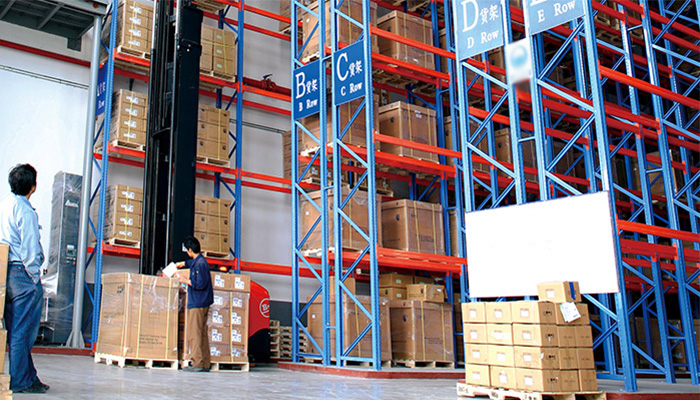
As rack height increases, load stability becomes more important. Heavy or uneven loads limit how high racks can go.
Even small load problems become bigger at higher levels. This is why rack height should always be planned together with load details.
Standard Height and Custom Height
Standard rack heights work well in warehouses with simple layouts and regular goods. They are fast to plan and easy to use.
Custom rack heights are useful when the building is unusual, the goods are special, or future changes are expected. Custom height helps use space better without creating risk.
Common Mistakes in Rack Height Planning
Some warehouses lose space because of poor height planning. Common mistakes include copying heights from other warehouses, using ceiling height as the only rule, or ignoring future changes in goods and equipment.
These mistakes often appear small at first but cause limits later.
Planning Rack Height for Long-Term Use
Good rack height planning starts with real conditions. It looks at the building, the goods, and daily work habits.
When height is planned carefully, racks support safe work, stable storage, and future growth.
Rack Height Planning with OKE Storage
OKE Storage helps warehouses plan rack height based on real storage needs. By studying building space, load type, and operation style, OKE Storage provides rack solutions that are stable, safe, and easy to use for many years.
Conclusion
There isn’t one perfect rack height that fits all warehouses. Standard heights are only references. The right rack height depends on your space, your goods, and how you work. Choosing the correct rack height leads to greater safety, better efficiency, and lasting value.
 EN
 PT
 ES
 AR
 RU
 FR
