
A warehouse rack collapse happens when a storage rack can no longer carry and transfer its load safely. The failure may start with one upright, one beam level, one anchor point, or one damaged pallet. Then the force can move through the rack line and pull nearby bays into the same failure.
This is why a rack collapse is not only a storage problem. It is a worker safety risk, an inventory loss risk, and an operations risk. A few seconds of failure can stop shipping, damage forklifts, block aisles, and create a long cleanup job.
Most collapses are preventable. The key is to understand that racks usually fail after several small problems build up over time. A light forklift strike, a missing beam lock, a heavier new SKU, and an old load sign may look minor on their own. Together, they can remove the safety margin the rack was designed to have.
The 7 Hidden Risks Behind Warehouse Rack Collapse
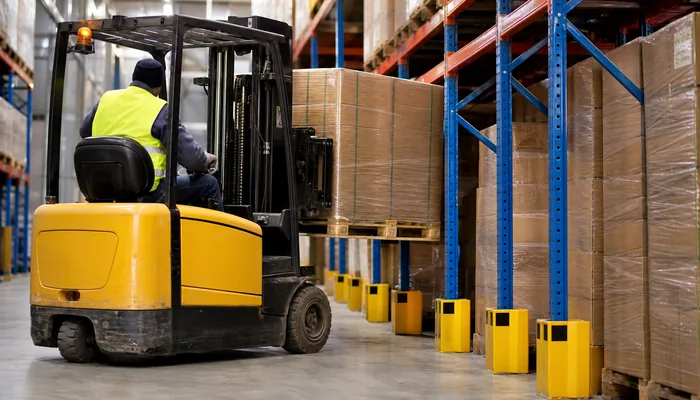
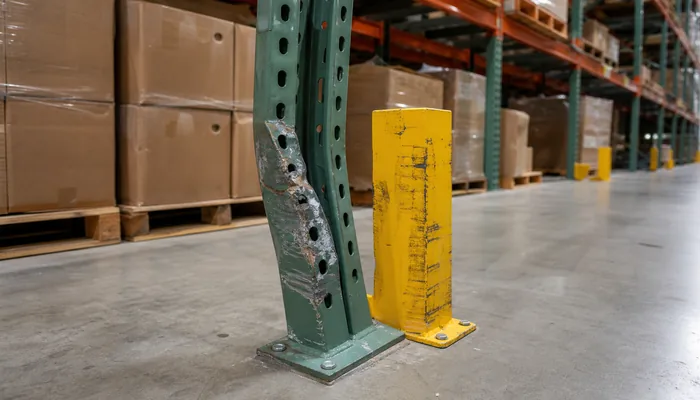
The first risk is forklift impact. Front uprights and end-of-aisle frames take the most hits because they sit in the path of daily traffic. Even a small bend can reduce capacity because the upright is designed to carry load in a straight vertical path.
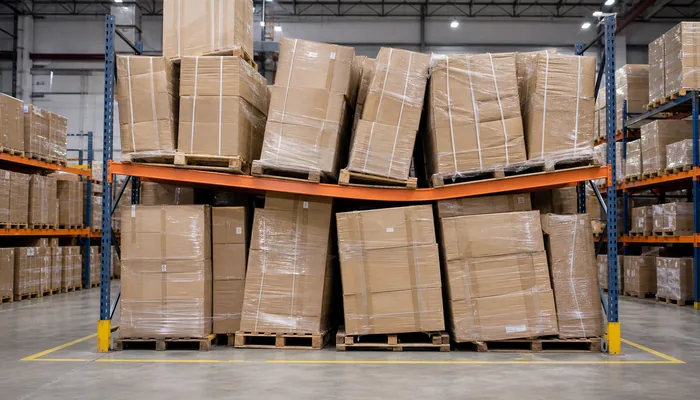
The second risk is overloading. A rack is rated for a certain beam level load, bay load, pallet size, and beam spacing. If heavier products are added without checking the original design, the rack may look normal while it is working beyond its safe limit.
The third risk is uneven load distribution. Pallets placed off center, heavy goods stored on one side, or poor pallet quality can twist beams and push force into the frame unevenly.
The fourth risk is missing or damaged safety locks. Beam locks help keep beams seated in the upright connector. If a lock is missing, a forklift can lift or dislodge a beam during normal handling.
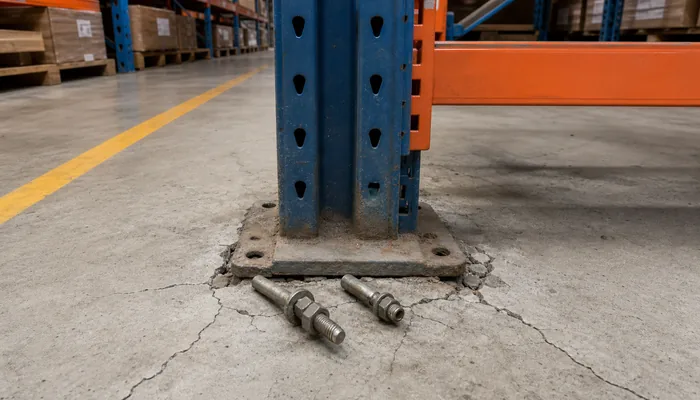
The fifth risk is poor anchoring or floor damage. Rack frames need a stable connection to the concrete floor. Loose anchors, cracked concrete, or moving base plates can make the system unstable.
The sixth risk is rack reconfiguration without engineering review. Moving beam levels, changing pallet sizes, removing row spacers, or mixing parts from different systems can change the original capacity.
The seventh risk is out-of-plumb drift. A rack can slowly lean after repeated minor impacts, slab movement, or uneven loading. Once the rack is no longer vertical, forces no longer travel cleanly through the upright.
Warning Signs You Should Never Ignore
A rack does not need to be collapsed to be unsafe. Many warning signs are visible during a simple walk-through. Bent uprights, twisted braces, cracked welds, missing anchors, damaged base plates, and loose beam connectors should all be treated seriously.
Beam deflection is another important sign. A loaded beam may bend slightly within its design limit, but deep sagging, permanent deformation, or a beam that does not return after unloading is a warning sign. Pallets that lean, sag, or overhang the beam can also show that the load is not sitting correctly.
Managers should also watch for operational clues. If operators avoid one aisle, complain about tight turning space, report frequent pallet contact, or keep replacing the same upright protectors, the rack layout may not fit the traffic pattern.
Rack Collapse Risk Table for Daily Checks
Use the table below as a simple guide for routine checks. It is not a replacement for a qualified rack inspection, but it helps teams notice risk before it becomes a failure.
| Risk area | What to check | Why it matters | Action level |
| Forklift impact | Bent uprights, damaged guards, twisted braces | Impact can reduce frame strength | Stop using the bay if damage is visible |
| Load control | Pallet weight, beam load signs, SKU changes | Overloading is a common collapse trigger | Verify capacity before storing heavy loads |
| Beam connection | Missing locks, loose beams, connector damage | A beam can unseat during handling | Replace locks and inspect connectors |
| Anchors and floor | Loose anchors, cracked concrete, moving base plates | Frames need stable floor support | Barricade and call a qualified installer |
| Alignment | Leaning frames, uneven row spacing, rack out of plumb | Lean increases stress on uprights | Measure and correct before reloading |
| Pallet condition | Broken boards, sagging loads, overhang | Bad pallets can drop product or overload beams | Reject unsafe pallets before storage |
What to Do Immediately After a Rack Collapse
If a warehouse rack collapse happens, the first step is to protect people. Keep workers away from the affected aisle and nearby rack lines. Do not allow anyone to climb on the collapsed steel or move product until the area is controlled.
Next, isolate the damaged bays and the neighboring bays. A collapse can leave connected frames under stress, even if they still look standing. Take photos of the scene, base plates, anchors, beams, pallets, and floor condition before cleanup begins.
Do not reuse damaged parts. Bent uprights, torn connectors, cracked welds, and pulled anchors may have lost strength. A qualified rack engineer, rack manufacturer, or trained rack inspection professional should decide what can be repaired and what must be replaced.
How to Prevent Warehouse Rack Collapse
Prevention starts with the right rack design. The rack should match the product weight, pallet size, forklift type, aisle width, floor condition, seismic needs, and storage method. Selective pallet rack, drive-in rack, push-back rack, pallet flow rack, and cantilever rack all carry load in different ways.
Load signs should be clear and current. Every storage area should show safe beam level capacity and key limits. If the warehouse changes products, pallet weights, beam heights, or storage density, the rack capacity should be reviewed again.
Protection hardware also matters. Upright protectors, end-of-aisle guards, rack back panels, row spacers, pallet supports, and safety netting can reduce the chance of impact damage and product falls. These parts do not replace good driving habits, but they add a practical safety layer.
Training must be simple and repeated. Forklift operators should know how to report rack contact, how to place pallets squarely, and why hidden damage is dangerous. A no-blame reporting culture helps because small impacts are reported before they become large failures.
Inspection Frequency That Works in Real Warehouses
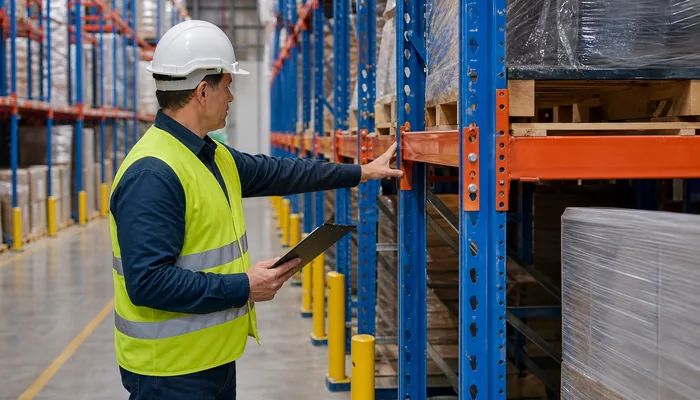
A practical inspection plan uses several layers. Operators should report impact and visible damage during daily work. Supervisors should walk high-traffic aisles weekly. A trained internal person should complete a documented inspection monthly or quarterly, depending on traffic, load weight, and damage history.
A qualified rack professional should inspect the system after any serious impact, collapse, reconfiguration, floor repair, or major product change. Annual professional review is also a smart baseline for busy warehouses.
Good records matter. Keep inspection dates, photos, damage locations, repair orders, replacement parts, and return-to-service approvals. These records help managers find repeated damage zones and improve the layout.
How Better Rack Products Reduce Collapse Risk
A safer system starts with racks that are designed for the real job, not only the lowest price. Strong upright frames, reliable beam connectors, compatible accessories, clear load labels, and engineered layouts all support safer daily work.
For a growing warehouse, custom rack planning is especially useful. The right supplier can review pallet weight, storage density, forklift movement, aisle width, and future expansion. This helps avoid common mistakes such as using light-duty frames for heavy goods or changing beam levels without checking capacity.
Useful product options include heavy-duty pallet racking, reinforced uprights, column protectors, end guards, pallet supports, wire mesh decking, back panels, and rack safety barriers. These products work best when they are chosen as one complete system.
Final Checklist Before You Reload a Rack
Before a damaged rack is returned to service, confirm that all loads are removed from unsafe bays, damaged parts are replaced, anchors are secure, beams are locked, frames are plumb, and load signs match the current layout.
Also confirm that the cause has been fixed. If the collapse started because of tight aisles, poor pallet quality, hidden overloading, or repeated forklift impact, replacing the steel alone will not solve the problem. The same risk will return.
A warehouse rack collapse is costly, but it is rarely a mystery. When a facility controls loads, protects uprights, inspects damage, trains operators, and works with qualified rack professionals, it can greatly reduce the chance of a serious failure.
 EN
 PT
 ES
 AR
 RU
 FR
