
Pallet racking weight capacity is related to the efficient use of storage space, safety of personnel and goods intact. Accurately assess the load-bearing specifications of the racking can not only realize the safe storage of goods, but also enhance the overall operational efficiency of the warehouse.
What are pallet racking weight capacity ratings?
Definition
The pallet racking weight capacity rating usually marked by the manufacturer, the maximum weight that each rack unit can load under reasonable conditions. If this weight is exceeded, structural damage may occur due to excessive force.
Different load-bearing rating of racking applicable scenarios
For storing heavy machinery parts, need a load capacity of 2,000 kilograms; for storing light goods,may choose racking with a lower load capacity (around 1,000 kilograms) .
Key Factors Affecting Pallet Racking Load Ratings
Beam specification

The beams specification directly affects the weight capacity of the racks. The larger the width, height and thickness of the beams, the larger the rack load capacity. For example, the thicker steel beams can increase the stability of pallet racking.
New Design Box Beam Load Chart | |||||||||
| Beam Length(mm) Capacity(kg) Section(mm) | 1800 | 2000 | 2300 | 2500 | 2700 | 3000 | 3300 | 3600 | 3900 |
| 100×50×1.5 | 4000 | 3300 | 2500 | 1900 | 1650 | 1300 | 850 | 730 | 640 |
| 110×50×1.5 | 5000 | 4000 | 3150 | 2400 | 2000 | 1700 | 1100 | 900 | 800 |
| 120×50×1.5 | 5000 | 3900 | 3000 | 2550 | 2000 | 1400 | 1150 | 1000 | |
| 140×50×1.5 | 3700 | 3000 | 2000 | 1700 | 1400 | ||||
| 160×50×1.5 | 4000 | 2800 | 2300 | 2000 | |||||
Traditional Design Box Beam Load Chart | |||||||||
| Beam Length(mm) Capacity(kg) Section(mm) | 1800 | 2000 | 2300 | 2500 | 2700 | 3000 | 3300 | 3600 | 3900 |
| 80×50×1.5 | 3100 | 2600 | 1900 | 1500 | 1250 | 1000 | 685 | 560 | 480 |
| 100×50×1.5 | 4000 | 3300 | 2500 | 2150 | 1700 | 1100 | 960 | 800 | |
| 110×50×1.5 | 5000 | 4000 | 3100 | 2700 | 2150 | 1450 | 1200 | 1000 | |
| 120×50×1.5 | 5000 | 3800 | 3300 | 2630 | 1700 | 1500 | 1250 | ||
| 140×50×1.5 | 4800 | 3800 | 2500 | 2100 | 1800 | ||||
| 160×50×1.5 | 4000 | 3500 | 3000 | 2500 | |||||
| 160×50×1.8 | 4700 | 3800 | 2700 | ||||||
| 160×50×2.0 | 3800 | 3200 | |||||||
Upright type and size

The uprights design determines the stability and load-bearing capacity of the racks. Different types of uprights (e.g. stamped vs. rolled) affect the load capacity of the racks. Stamped uprights are usually suitable for high high vertical pressure, while rolled uprights are more suitable for horizontal force.
Upright Frame Load Chart | ||||
| First Level(mm) Capacity Per Bay(kg) Section(mm) | 1300mm | 1500mm | 1700mm | 1900mm |
| 80×60×1.5mm | 6600kg | 6300kg | 6000kg | 5700kg |
| 80×60×1.8mm | 7860kg | 7490kg | 7100kg | 6750kg |
| 80×60×2.0mm | 8800kg | 8400kg | 8000kg | 7600kg |
| 90×70×1.8mm | 9900kg | 9430kg | 8950kg | 8500kg |
| 90×70×2.0mm | 11000kg | 10450kg | 9900kg | 9420kg |
| 90×70×2.3mm | 12600kg | 12000kg | 11400kg | 10800kg |
| 90×70×2.5mm | 13700kg | 13000kg | 12400kg | 11800kg |
| 100×70×1.8mm | 10600kg | 10100kg | 9600kg | 9200kg |
| 100×70×2.0mm | 11800kg | 11200kg | 10700kg | 10100kg |
| 100×70×2.3mm | 13500kg | 12900kg | 12200kg | 11650kg |
| 100×70×2.5mm | 14700kg | 1400kg | 13300kg | 12650kg |
| 100×95×2.0mm | 13900kg | 13300kg | 12600kg | 12000kg |
| 100×95×2.3mm | 16000kg | 15250kg | 14500kg | 13800kg |
| 100×95×2.5mm | 17400kg | 16600kg | 15750kg | 15000kg |
| 100×95×2.75mm | 19200kg | 18250kg | 17300kg | 16500kg |
| 120×95×2.5mm | 18600kg | 17700kg | 16800kg | 16000kg |
| 120×95×2.75mm | 20500kg | 19500kg | 18500kg | 17500kg |
| 120×95×3.0mm | 22300kg | 21200kg | 20200kg | 19200kg |
Height and number of racks
The rack height has an important impact on the load-bearing capacity. Generally speaking, the higher the rack, the relatively lower the load carrying capacity. High racks are more prone to lateral tilting when load-bearing, so you need to make sure that their structural design can adapt to the needs of high-level racks.
Cargo distribution
The way the goods are distributed directly affects the load capacity. Evenly distributed loads are more likely to ensure rack stability than concentrated loads. Centralized loads concentrate pressure and can lead to rack damage.
Material and welding quality
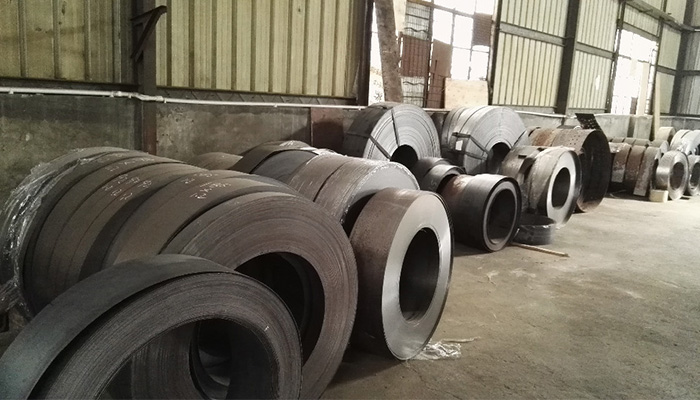
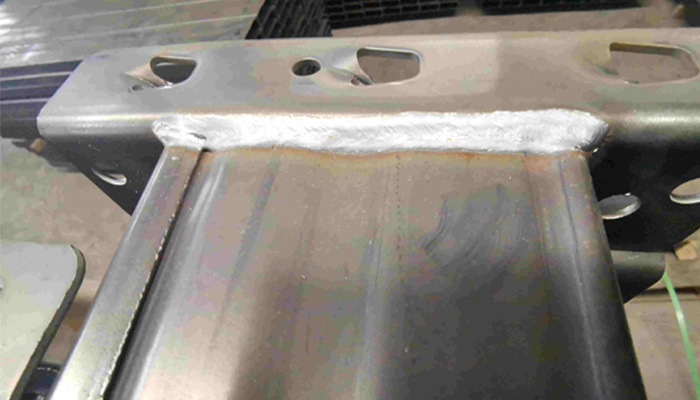
The load capacity performance of racks is directly affected by the strength grade of steel and welding technology. The use of high-strength steel and standardized welding technology can significantly improve the load-bearing capacity of the racks, while poor quality materials or welding defects may lead to insufficient structural strength, unable to meet the design load requirements, thus increasing the potential safety hazards.
Structural design
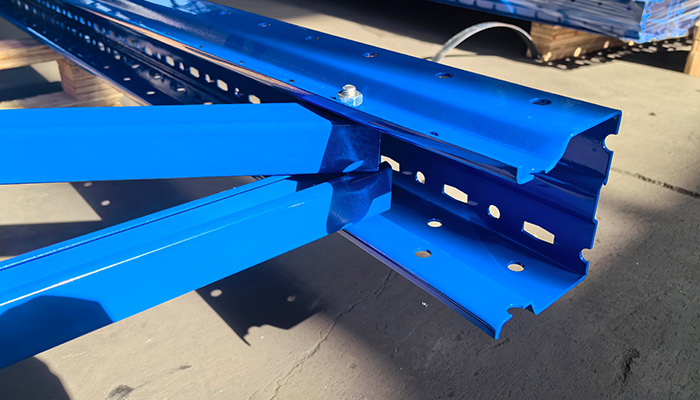
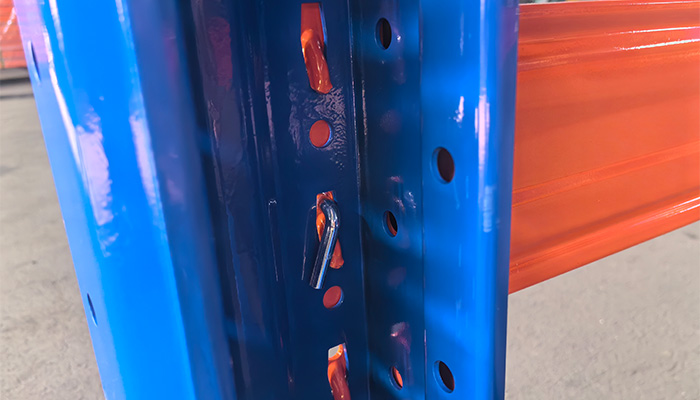
The rack design, the connected way and the workmanship have a direct impact on the load capacity.
Manufacturing standards
Pallet racking that complies with international standards usually provides higher load-bearing capacity and safety.
Usage environment
The temperature and humidity of the warehouse, the way the goods are placed, etc., will also affect the actual load capacity of the pallet racking.
How to correctly identify and calculate racking load ratings?
Check the product specification or the weight capacity chart provided by the manufacturer
The load ratings for pallet racking are usually detailed in the product specification. By checking the instruction manual or requesting a load chart from the supplier,you can confirm the maximum load capacity of the racking.
Introduction to formulas (if applicable)
The formulas are needed to calculate load-bearing ratings in some situations. The load capacity of beam can be calculated from its cross sectional area and material strength. Common formulas include: `F = σ * A`, `F` is the load capacity, `σ` is the material strength, and `A` is the cross sectional area of the beam.
For example:assuming that the beam cross-section size of pallet rack is 10cm x 20cm, and the strength of the steel used is 250 MPa, then its load capacity can be calculated as according to the formula:
\[ F = 250 \times (10 \times 20) = 50000N \]
Common misconceptions
Common misconceptions include confusing “total load capacity” with “per layer load capacity”. Total load capacity is the maximum load of the entire rack, while per layer load capacity is the weight that can be loaded on each tier of racking. It is important to distinguish between the two when selecting racking.
Recommendations for choosing the right load rating for pallet racking
Evaluate the needs of warehouse use
When selecting racking, the first step is to assess the warehouse actual needs. Understand the type of stored goods , their weight and stored way in order to select the appropriate load rating.
Cargo type and weight
In order to ensure safe and efficient storage , match the appropriate specifications of the pallet racking according to the characteristics and weight of goods. For heavy machine or materials and other heavy loads, must choose high load-bearing designed rack structure.
Communicate with your supplier about customization options
When communicating with your supplier,it can customize according to your specific needs,ensure that the racks will be able to carry the expected weight.
Consider future expandability
The choice of pallet racking should consider the current use of demand and long-term development of space. It is recommended to reserve higher load capacity and expandable racks to meet future expansion needs.
Conclusion
Pallet racking load capacity standards is an important for the safe management of the warehouse. From rack type to routine maintenance, must always put load-bearing safety in the first place. Enterprises should test regularly or inspect professionally to ensure the structural stability of the racking, so as to continue to protect the safety of warehouse operations. This preventive maintenance strategy can not only extend the service life of the equipment, but also effectively avoid potential risks.IF YOU ANY QUEATIONS,you can contact OKE Storage.
 EN
 PT
 ES
 AR
 RU
 FR
